



As anybody who has been driving awhile can tell you, the only thing about driving that’s predictable is that it’s going to be unpredictable. From flats to accidents, roadside emergencies to breakdowns on dark and lonely highways, no matter what you drive, you’re eventually going to run into an issue.
Being prepared for the inevitable breakdown, accident or emergency is always a good idea, and McLarty Daniel Buick GMC is here to help with our list of essentials for your roadside emergency kit as we head into the winter months, when the nights are cold and dark. Read on for our suggestions for the must-haves any time you head out on the road.
A STURDY, ZIPPERED TOTE BAG: You can put together all the emergency kits you want, but if your emergency supplies are scattered around your trunk or…
rolling around in the back seat floorboard when you need them, it’s going to make a bad situation worse. As such, find yourself a sturdy, zippered tote bag, gym bag or duffel bag in which to store your emergency kit.
A FLASHLIGHT: This one can’t be overstated. As you may have heard, it gets dark at night, and if you’re broke down on the road, you’re going to need light. Yes, your smartphone probably has a flashlight on it. But what if you need light while simultaneously needing to use your phone to call for help or look up information? What if every bit of cell phone battery power is the difference between safety and tragedy, and you can’t afford to run a cell phone flashlight for hours? Yeah, now you see the issue. So get yourself a small LED flashlight. Bonus points for one with quick-change red filter and/or a flashing function that can be used to signal to other drivers on the highway.
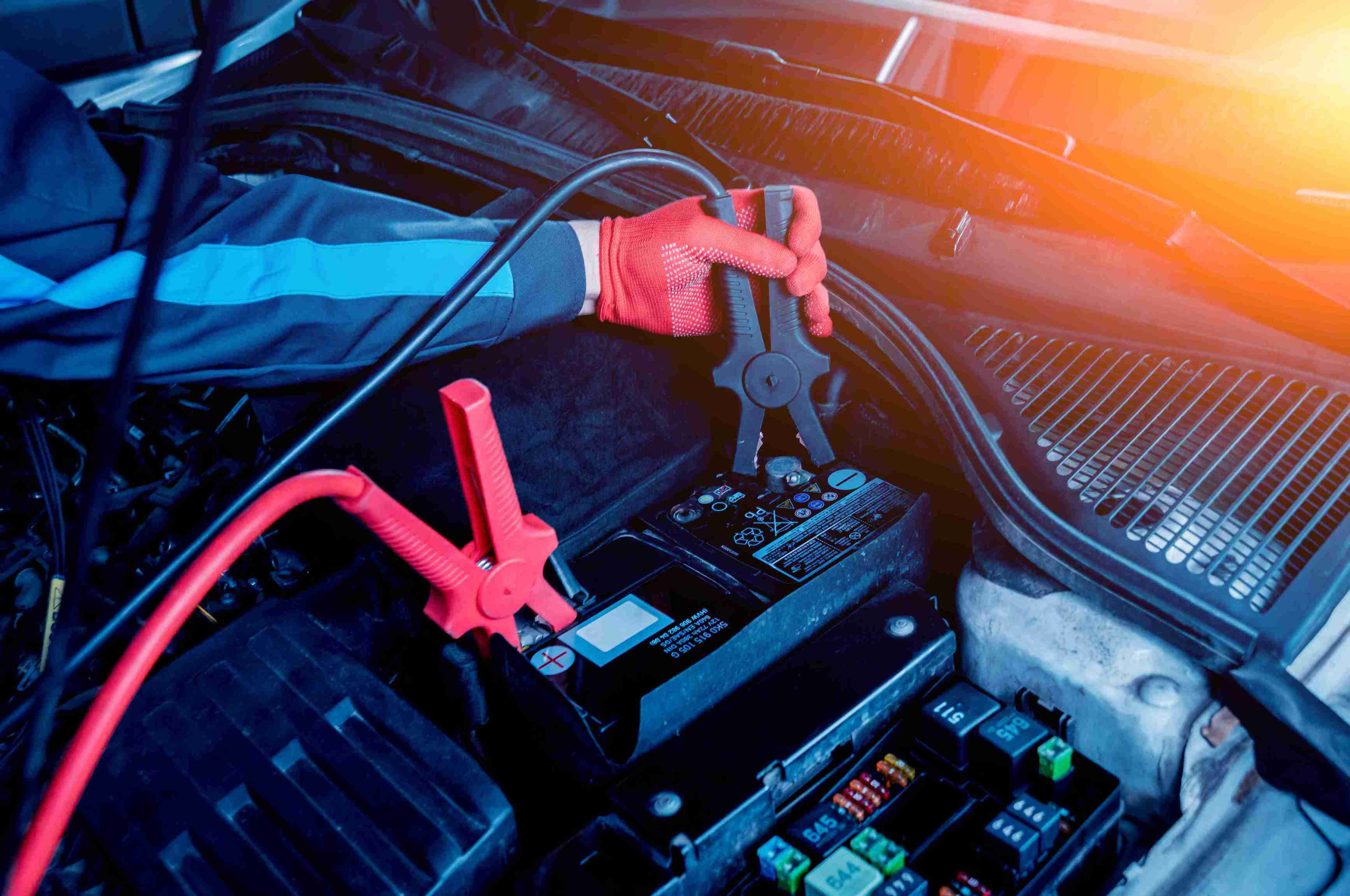
JUMPER CABLES: Is there anything more gut-wrenching than coming out to realize you left your headlights on and your battery is dead, especially when it’s dark out? We’ve all been there, which is why a lot of drivers are willing to give you a jump. To do so, however, you need a set of jumper cables to connect your vehicle’s battery to that of your Good Samaritan’s battery, and you need to know how to use them. So buy a set of jumper cables for your emergency kit and read the instruction manual and your vehicle owner’s manual to learn how they work BEFORE you need them.
A SMALL COMPRESSOR: Other than the dead battery seen before, the second-most sickening feeling is coming out and finding a flat tire. While you should familiarize yourself with how to safely change a flat, sometimes you may be in a situation where you can’t change a flat in a given location or don’t want to — a busy roadside or parking lot, for instance, or a location that may be less than safe. With that in mind, think about investing in a small, battery powered air compressor with a hose and chuck that can air up vehicle tires. These are compact, can be purchased fairly cheaply at any auto-parts store, and plug into the standard 12-volt outlet in your car. While it’s not a long-term solution to a flat tire, a lot of times it can get you aired up and back on the road for long enough to get to a repair shop.
A TIRE PRESSURE GAUGE: Where the rubber meets the road, few parts of your vehicle are more responsible for your safety on the highway than your tires. Keeping safe means keeping your tires in tip-top shape, including their air pressure. As such, buy yourself a cheap tire pressure gauge, familiarize yourself with your car’s recommended tire pressure, and check them often. They’re very affordable, and come in either old-school analogue or easy-read digital versions.
A BLANKET: Whether you’re spending a few cold hours waiting on a tow truck or using it to help comfort someone who has suffered an accident on a February night, a clean, dry, warm blanket can be a literal lifesaver in a roadside emergency. Find a smaller fleece throw, pack it in a large freezer bag and stick it in your emergency kit.
A BACK-UP PHONE CHARGER OR CHARGED BATTERY PACK: Most of us are attached to our phones these days, and really don’t realize how much we depend on them until that battery level drops to zero. Out on the highway, a fully-charged cell phone can be the difference between life and tragedy. Make sure you’re prepared for anything by packing a back-up phone charger in your emergency kit, or — even better — a fully-charged back-up phone battery. These can be had relatively inexpensively and are a lifeline if your phone is nearly dead in an emergency.
There’s all kinds of other things you can drop in your roadside emergency kit, including things like bottled water, first aid supplies, snacks and reflectors or flares. These seven items, however, should probably be seen as the true essentials that your kit can be built around.
Worried your old vehicle is going to leave you stranded some cold, dark night? Then stop worrying and stop in at McLarty Daniel Buick GMC to check out our full selection of reliable, dependable new and used vehicles! Or you can check out our full lineup online right now.
Connect with us


- September 2025
- August 2025
- March 2025
- January 2025
- September 2024
- August 2024
- July 2024
- May 2024
- April 2024
- March 2024
- February 2024
- January 2024
- October 2023
- September 2023
- August 2023
- July 2023
- June 2023
- May 2023
- April 2023
- December 2022
- June 2022
- May 2022
- February 2022
- November 2021
- October 2021
- September 2021
- August 2021
- July 2021
- June 2021
- May 2021
- April 2021
- March 2021
- February 2021
- January 2021
- December 2020
- November 2020
- October 2020
- September 2020
- August 2020
- July 2020
- June 2020
- May 2020
- April 2020
- March 2020
- February 2020
- January 2020
- December 2019
- November 2019
- October 2019
- September 2019
- August 2019
- July 2019
- June 2019
- May 2019
- April 2019
- March 2019
- February 2019
- January 2019
- December 2018
- November 2018
- October 2018
- September 2018
- August 2018
- July 2018
- June 2018
- November 21